
[
]
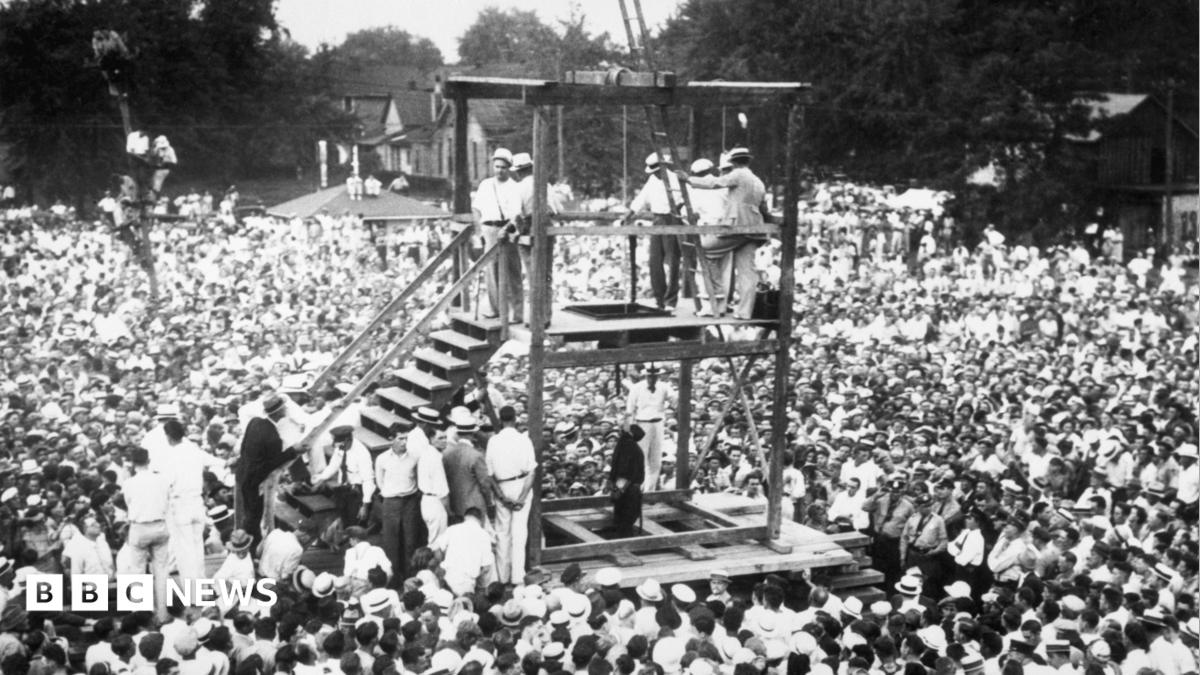
Sonya Lea, who just last year published a book about Bethea’s execution, “felt absolute horror for our descendants” when she heard of the announced firing squad livestream.
“What they called it in 1936 was a carnival of sadism,” she said. “That we now have the technology that can make it go wider than the 20,000 people who showed up … to witness in Owensboro, Kentucky, it just makes it even more horrific.”
Lea’s grandparents were teenage newlyweds among that 1936 crowd. She only found out after her grandmother’s 2002 death, when she read an account her late grandma had given detailing how they were close enough to hear Bethea’s neck snap.
The author’s subsequent years of research taught her that many Kentuckians were “haunted” by that execution.
“I really thought, with all my heart, that we had put this in the rearview mirror, this level of grotesquery that only a few countries in the world engage in – Iran, North Korea, Afghanistan,” she said. “Are we now, as the United States of America, considering ourselves to be part of that kind of government? It’s just horrific.”
But the polarisation and rhetoric in American politics may have, in some way, perhaps set the stage for such an announcement, said Kurt Gray, a social psychology professor at Ohio State University.
“Some Americans might thirst for blood, but I think a lot of Americans don’t, and, if anything, I think a lot of other Americans are just kind of maybe desensitised,” he said. “So it’s not like they’re cheering a public execution; they’re just like, ‘Oh, yeah, I guess that’s where we’re at now.'”
[
]






Leave a Reply