
[
]
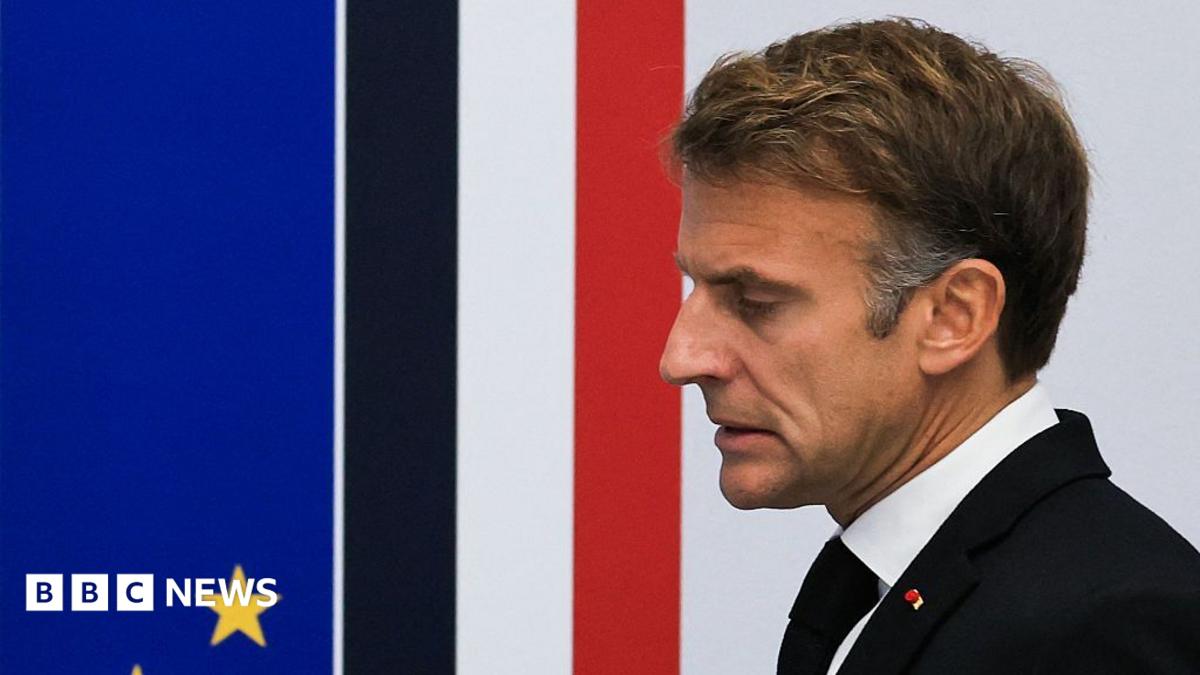
On Sunday the Secretary General of the CGT union, Sophie Binet, accused Macron of failing to address students’ concerns, the cost-of-living crisis or the dwindling quality of public services in France.
He’s apparently passed that baton to Prime Minister Lecornu. Yet he and his interior minister are charged by many in France with being woefully ill-prepared and under-policed ahead of Saturday’s multiple, scheduled protests.
The president of France’s lower house of parliament, Yaël Braun-Pivet, says she wants to open an inquiry into exactly what happened this weekend and why.
“Things are dark in the city of light [a nickname for Paris]” was the graffiti I read daubed in red paint across a wall adjacent to a row of shattered shops in the French capital on Sunday night.
Macron is widely viewed here as a lame-duck president. He is on his way out. There’s a hotly contested race under way to become his successor, with the vote scheduled in six months’ time. The presidential candidate from the anti-immigration nationalist right (Marine Le Pen) and also the anti-capitalist left (Jean-Luc Melenchon) are vying to make headlines.
That is adding to current tensions in France – in politics as well as on the streets.
Parliament here is paralysed, deeply divided between three vying political blocks.
Then there are France’s financial woes too. Investors are leaning hard on this country to get its spiralling public debt under control. But the French government worries, if it cuts public services or welfare, yet more angry people will pour out onto the streets.
What now, what next, is our country broken? You hear these questions a lot at the moment.
People across France were shocked and troubled by Saturday’s events. The images of tear-gassed towns, apparently unimpeded looters and burning public buildings have worried the nation.
[
]




Leave a Reply